

Navigating Cost Compliance:
Understanding the Principles of Allowable, Reasonable, and Allocable Costs
Cindy McGuire | May 26, 2026
Title 2 of the Code of Federal Regulations (2 CFR) sets the main rules for how federal funds may be budgeted, spent, and documented. These principles guide federal grant compliance. Whether you are managing a new award or closing out a multi-year project, each expense must meet the standards for allowability, reasonableness, and allocability. Following these rules does more than prevent errors. It shows sound stewardship, transparency, and accountability to funders. That begins with understanding how federal standards evaluate costs.
The Core Framework: The A-R-A Test
Every cost charged to a grant must pass three tests before it can be considered compliant:
Allowable (CFR Reference: §200.403)
-
-
Core Test: Necessary, aligns with the award’s purpose, consistent with policies, incurred within the performance period, and properly documented.
-
Key Takeaway: Always confirm the cost aligns with both the Uniform Guidance and the grant’s specific terms.
-
Reasonable (CFR Reference: §200.404)
-
-
Core Test: Passes the “prudent person” test; reflects fair market value; consistent with sound business practices.
-
Key Takeaway: Use documentation such as quotes, comparisons, or approvals to show that the cost was justified and fair.
-
Allocable (CFR Reference: §200.405)
-
-
Core Test: Assignable in proportion to the benefit received; not shifted to cover shortfalls or unrelated activities.
-
Key Takeaway: Maintain clear allocation logic for shared costs such as personnel time, supplies, or equipment.
-
What is MTDC?
Modified Total Direct Costs (MTDC) is the basis for calculating indirect costs under the Uniform Guidance. It represents the portion of total direct costs eligible for application of an indirect cost rate.
MTDC includes:
-
-
Salaries and wages
-
Fringe benefits
-
Materials and supplies
-
Services
-
Travel
-
The first $50,000 of each subaward
-
MTDC excludes:
-
-
Equipment (typically $10,000 or more and useful life over one year)
-
Capital expenditures
-
Tuition remission
-
Scholarships and fellowships
-
Participant support costs
-
Rental costs of off-site facilities
-
Subaward amounts above the first $50,000
-
Why It Matters:
MTDC ensures that indirect costs are applied only to direct expenses that truly benefit from shared administrative and facility resources. Accurately defining your MTDC base is critical to avoid overcharging or under-recovering overhead and to stay compliant with 2 CFR Part 200.
Key Updates and Practical Cost Considerations
Federal cost principles remain largely unchanged, but recent updates affect how organizations manage compliance. Most notably, the Office of Management and Budget raised the Single Audit threshold to $1 million. Although some smaller entities may no longer need an annual Single Audit, their compliance responsibilities remain the same. Federal agencies may still review expenditures at any time, so organizations should maintain strong internal controls, consistent documentation, and clear supporting records. Federal oversight continues to focus on several key operational areas:
-
Procurement Flexibilities (§200.320): Grant recipients may raise the micro-purchase threshold to $50,000, but only with written procedures, clear justification, and strong internal controls.
-
Key Fiscal Thresholds (§200.1): The rules set a general $10,000 equipment threshold. They also require Modified Total Direct Costs (MTDC) to exclude the portion of any subaward above $50,000.
Compliance depends on using the right purchasing method for the size, complexity, and timing of the need. Speed and convenience may support operations, but they should never override fair competition or proper documentation. As federal oversight increases, organizations should be ready to document the rationale for procurement decisions and maintain records that support compliance.
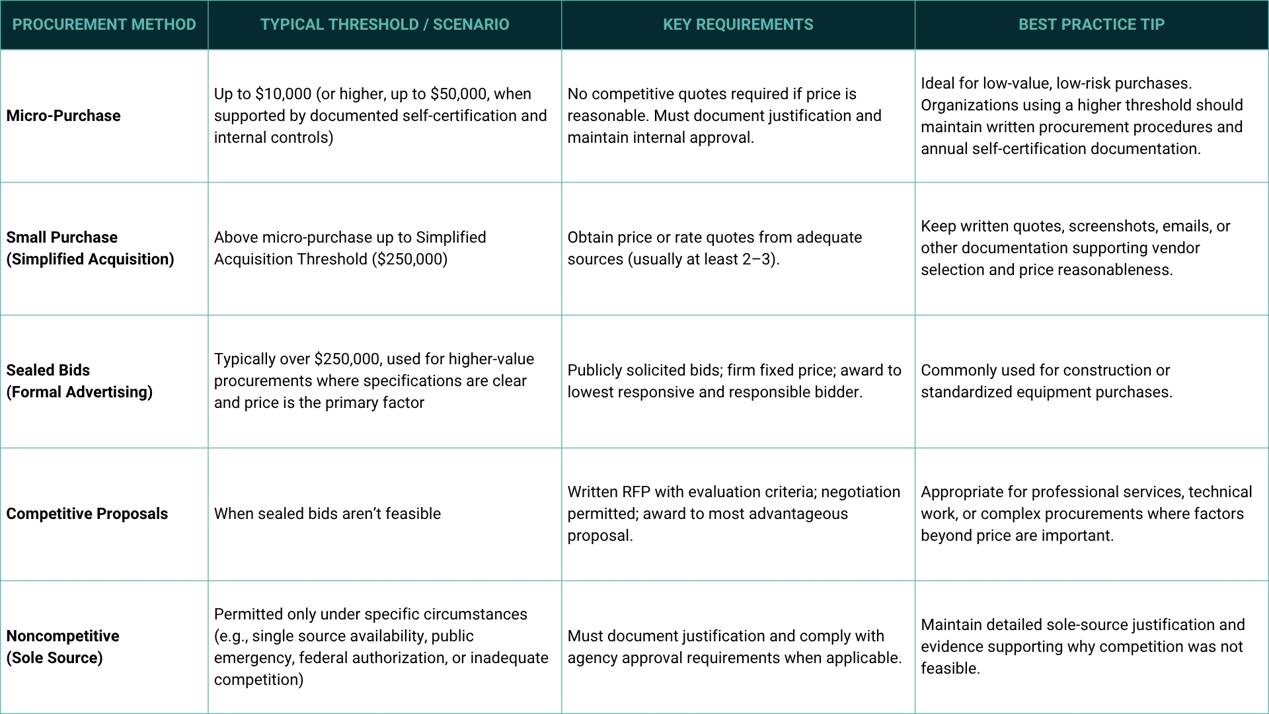
Roadmap for Stronger Cost Controls
To navigate today’s heightened federal oversight, organizations must transition from passive tracking to active compliance. The following roadmap outlines safeguards to help support compliance and accountability.
-
Align Policies: Make sure your written policies show how the organization checks and records allowability, reasonableness, and allocability (A-R-A). See 2 CFR §200.403–200.405.
-
Train Staff: Compliance is a shared responsibility. Offer regular training on A-R-A standards to program, finance, and procurement staff to help keep processes aligned and reduce gaps in communication.
-
Use Standardized Tools: Add A-R-A checklists, templates, and documentation steps to your regular purchasing process to help avoid inconsistencies.
-
Document Decisions in Real Time: Record the rationale and approvals at the time of purchase. Justifying decisions after the fact is less reliable and may not meet federal audit standards.
-
Implement Internal Spot Checks: Schedule regular internal reviews. Do random quarterly checks of transactions and supporting documents to identify any gaps early.
-
Centralize Compliance Policies: Create and maintain a cost policy manual that connects procurement rules, cost allocation methods, and closeout procedures.
Compliance with 2 CFR requires an active, ongoing effort. As oversight increases, organizations need strong internal controls, consistent documentation, and clear processes that support accountability.